
Out Walking
from the archive

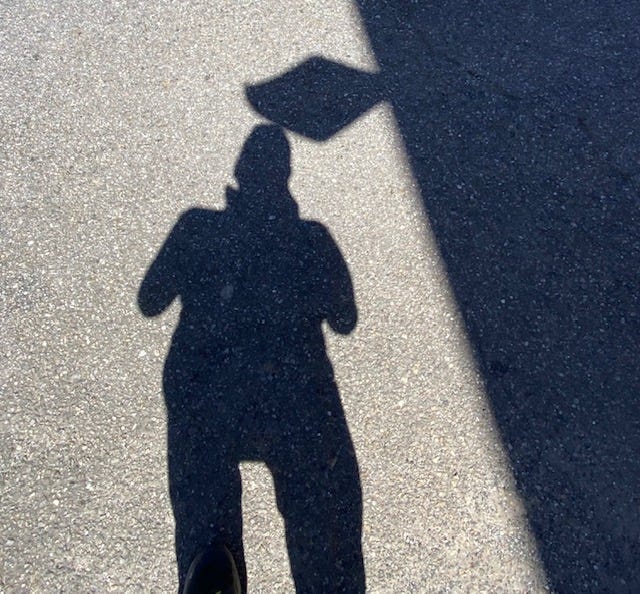
Walking is a way to circle back on life. To take a walk is to call time out, to admit a certain overwhelm in relation to the day. I’ll be out walking, you say, back in a few hours.
Sometimes a walk is as sacred, as conscious, as a walking meditation. You move step by step, breath by breath. Other times, it’s just a tramp to the store for the paper: a chance to stretch the body and the let the mind off its leash. The change in pace regenerates your energy, reconnects you with the world—snow melting, sun out, birds in the trees. Or you lose everything you’ve stored up in the space between there and back.
Then there are the walks accompanied by the dutiful shadow of shame. On these treks you try to outpace your mood, though its shadow keeps on you. The crows come and fly at the back of your head. Nothing suits you and nothing feels good. Thoughts are torn bits of cloth flapping at your knees. Once in a while the shadow disappears—just vanishes from underneath you—and the crows turn back for home base. Free in your steps, you walk quickly into a new region of the day.
Walks dissipate nervous energy. Their looping routes allow interior monologues to play out to their haphazard ends. They are paths you find yourself on, left simply with your steps and the day around you, the quality of light. In its purest form, a walking meditation that burns off second thoughts. In its basest: dead time, sleepwalk, static.
If you are not careful, these walks become bent solely toward the purpose of release and redemption. Accordingly, you come home and immediately fall dead asleep, refusing to wake up until the storm cloud has passed. This technique does you no good. It is a postponement
~~
For as long as I can I remember I have gone out walking as if making an escape—to come upon brief, golden moments of presence. I walk toward this immersion as a way to maintain hope—sometimes aimlessly and desperately, sometimes purposefully, regally. Wherever I’ve landed, whether city or country, suburban streets, apartment complexes, backwoods, or long county roads, I have been inclined to head out on a day-hike journey. In a flash, I’ve turned my new surroundings into the familiar realm of mythic imagination. It is the one of the ways I define myself, that essential something about me—the way someone becomes a bird-watcher, a handball player, a shade gardener. I say: I am a walker.
I walk to stay balanced in my life. To see new things and see things anew. To replace restlessness with curiosity. I am always looking for new routes, for ways out of dead-ends, for short cuts through back lots. With no destination in mind, my goal is to detach from a litany of worries and move unfettered through the afternoon. I want to lose myself in footfalls, to walk into a balanced silence and pass like a ghost between the houses and the shedding trees. The signposts are simple: oak tree, puddle, side street, autumn leaves. I follow them as a palm reader scans a hand.
~~
I agree with Thoreau when he crabbily puts down the urge to travel abroad. When one has books and open land around him, what more can he ask for? In “Walking,” Thoreau challenges the reader to take a true walk, one on which you’re ready to forsake friends and family, sloughing off the outer clothing of civil and cultural responsibility. It’s a tall order. And, in a sense, it’s a tall tale. Thoreau doesn’t really expect you to head out West and, when the sun begins its inevitable drop, to keep on going. He knows the day hike’s bookend, its turning back point. But when was the destination ever the point? He’s talking of “setting out,” which is the spirit inherent in the act of venturing forth.
~~
On my way back from this morning’s walk, an eerie sense takes hold. What if, by some small chance, all the work I’ve done these last few years has come together to create a new consciousness? What if I’ve managed to rise above the doldrums to see from on-high the whole set of my received and self-created neuroses and ruts? Wouldn’t then my experience be similar to—might in fact be—that of an alien, or an angel or some sort of bhoddisattva dropping into this lone pilgrim’s body? It’s a far-fetched idea, I know, but there’s something pleasurable about entertaining it. That you can be inhabited by a new being, one fresh from full consciousness, but that your corporeal form remains the same. This new consciousness arrives full of surprise—like jumping into cold water—how limited this singular body is. With its aches and pains. With its weaknesses and limits. The bum knee, the perpetually strained back. The eyes with their muddy water windows. The brain seemingly clogged up, pistons only firing here, sometimes there.
And then this new consciousness realizes, with a kind of calm resignation, oh, this is what I have to work with, this is my test and my chariot. There is nothing more, nothing less. And then you walk forward into the day, excited now, feeling your way into your wobbly biped hobble, shaking your wings into arms, already laying out the plan that has been hatching to change the world, moment by expanding moment.
~~
Funny how a string of bad days can open up suddenly into a good day. Just like that. I am out walking along the same old same trail, tinkering with a poem, looking out into the woods then down onto the ragged page. Glancing up, I see a patch of the forest light up in the late afternoon sun. As if a light bulb has come on. Then the next swath lights up, as well, then the next four sections of the hill become illuminated, in quick succession, until the whole hillside is alight. Looking back up a moment later, the clouds have passed over, the light fallen back, and a breeze slips a cold hand into my coat. Then the first drops of rain fall down as if a crow has purposefully knocked a branch as we pass below. But then more rain follows in a wet net of drops. Ursula looks up. It’s like this, standing still, looking up and then at each other, that we get hit by the storm. All of a sudden we’re in a downpour. In under five seconds, I am drenched from head to foot. Ursula tries to shake her coat out but to no avail. Now the wind has picked up, as well, and there’s nothing to do but turn and head back to the car. (I often hide under a big tree and wait it out. But not today.) I start running; Ursula tears ahead happily. As long as there’s no thunder and lightning, she’s fine. My t-shirt and pants are plastered against my body, making it hard to run. So I slow down to a stride and enjoy the feeling. It’s not cold out. Only a hard rain falling. And, just like that, the sleepiness and lingering blue have disappeared.
~~
Hamlet knew the difference between a hawk and a handsaw, between birds of prey and birds that rise up in startled flight and take wing from hallowed ground, though he feigned indifference. As do I, now, lost in this light of the day’s waning: they’re hawks. A dozen, no, fifteen of them, overhead, circling and diving. At least I think they’re hawks: do hawks congregate so in broad daylight? Are they hawks or merely buzzards, who hover this way in movies above the dying? What’s down here in this suburban tract to draw them? A golfer croaked on the back nine? A tabby brought down by a dog? Or is this some sort of migration? Do hawks travel like a big band? And is that south they are heading or am I simply turned around, jaw slack from incessant dropping? Maybe it’s me who needs migrating.
Come on, Bird Brain, wake up! Look up and observe the birds! What color are their wings? Is there a telltale crook at the tips? How many fingers? Don’t matter the light is aimed high and in their faces, keep looking and note the markings, the coloring on the belly. You know the drill. But then my neck hurts, and the dog wants back in if I’m not walking, and the light has dropped behind trees, aflame in golden coloration.
I’ve since been told hawks do migrate in groups; the circling is the birds elevating in a shaft of warm, rising air, riding thermoclines. When they have enough height they slip off the stream to the south gliding down to the next draft where they circle again. Hang gliders use the same strategy. (Side note: hawks and eagles circle in the same direction, and a glider once ended up circling the wrong way, a golden eagle screeched a scolding each time they passed in their loops.) There are narrow gaps in this part of the Appalachians where most hawks get funneled, bunched onto one ridge in a traffic jam of soaring.
But the hawks are gone; it’s got cold. So in I go, though the Sibley is no help. Could be hawks, could be vultures. It’s the next day, again out with dog, down at the bend in the river, when we startle the great blue heron out of bush up into the autumnal wind. Dog dancing ahead. And when I watch it fly out in graceful leave-taking, I know what Hamlet knew: the soul is a bird in the bush, a gang of hawks in open air, gliding south…sorry biped out for a stroll…all of these, at once….too good for the kitchen and not good enough for family…lowly street beggar, princely heir.
~~
I savor the rare moment when it all comes together. The day that begins with me writing my morning lines. Maybe I tinker with a poem on my morning walk, which leads into ideas about the day’s poetry workshop. Last night’s reading suddenly speaks to a student’s work, and I go into class ready to talk about the lines, the poetry, the book, the student work—even the walk. I have enough time in the day to walk some more, make dinner with Ali. Then, before I fall off to sleep, I get to read some more, maybe connect with friends, work on side projects simmering on the stove. Such days are ideal.
The crows sit in the trees like sentries. It seems the trees shivering in expectation for the cold. No golfers yet on the course, only sprinklers doing their warm-up routines. There is a boy alone down by the stream, flicking a stick at the shell of an old tortoise. A neighbor’s house is quiet in that empty, moved-away kind of way. Last night a small pine fell into the fairway, an aura of needles sprayed around its humbled form.
~~
The walk starts off poorly with Ursula taking a shit on our neighbor’s lawn, and continues to sour as we make our way up hill: first with the unwanted companionship of rain, then a whole team of high school golfers clogging the back nine, braving the falling slop and dropping dark, beers stored away in side pockets. I hold back to give them time. Their play is sloppy, drunken. They’re having a blast. When I start up again, Ursula strains on the leash—dashing off for squirrels, bolting mindlessly at a passing car. I yell at her and yank too hard on the leash.
Finally, we’ve outpaced the brat pack, circling back, the long expanse all to ourselves. But more bad luck steps out of a Suburban with his checkered bag. The poacher tees up on the twelfth. I curse the man for his stealth and hold Ursula back as he trudges up the fairway. We pause again, at the thirteenth tee, crouched under a tree and patient, having passed through our enthusiasms, when the last player in our sad little melodrama slips into a view.
Slight of build, with hooded sweatshirt, the man moves with assurance among the trees, picking up lost balls and dropping them into his pouch. I have to laugh. All I wanted was a simple walk with my dog, some free space to roam before dark, and I have been outfoxed. The lone golfer knows that he’ll have three or four holes to himself—what with the rain and the hour—and the ball thief knows that lazy over-hitters will have left their shots (unscored) like Easter eggs in the leaves.
~~
I read somewhere that Glenn Gould needed seven hours solitary time for every hour of social time. There are times when I am pretty close to that, others when the ratio swerves back to some number closer to 2:1. (Last week was actually 1:2.) 3:1 or 4:1 would be ideal, where my inner weather is that ecotone between two seasons. Maybe it’s the tumult of my own fall that I desire. It’s in the descent that I rise. It’s funny, this duplicity. How can I stand tall and quiet when I am most happy walking, lost inside a swirl of falling leaves?
~~
I’m trespassing the public golf course again. Up ahead a crow patrols the rough for grub. Another pair grumble on the fairway. When I move too close, the trio flaps up into a neighbor tree, shifting in the tree branches, calling out briefly to one another. I read somewhere that crows have names for humans who walk in the woods. I wonder if I’ve earned one by now. If it’s “Stupid Biped!”
Further along, I spy a boy about to tee off. He can’t be more than fifteen. I
pause my stride for him to play through and to watch his practice swing, which is near perfect: grace and power wound tight with joy, released effortlessly. He practices it a few more times, giving the club its full round, then knocks the ball a good long way. Club in bag, and he’s off walking.
“Nice swing,” I offer.
He smiles shyly. “Over the hill, anyway.”
We walk up the fairway together: me off in the trees, he right down the middle. His flattop cut straight out of the 50s, his accent pure southern lilt.
“You golf much?” He is asking me to join him, I think, if not then later.
“A little, not much.”
He nods and begins preparing his next shot. After he hits it (up to green edge) he asks me one more thing.
“What hole you live near?”
“On up past the thirteenth,” I call back, ready to turn downhill.
He digs in his bag, thinking ahead to the chip. I don’t wait for his response, already turning for home.
~~
There’s a brief passage in Kim Stafford’s book Early Morning in which he describes his father giving him a tip on walking. He’d just learnt it from a Native American man, and was bringing the new information back from his travels. In order to conserve energy, the man had told him, you take a running step every third step, alternating left and right. In this way, you can walk all day without getting tired while making good time. I try it now. And though my dog gives me a funny, it works. Takes a while to get the rhythm down—for it not to feel lopsided—but eventually I fall into its rocking groove. There is a cross-country skiing hitch in it, a slightly off-rhythm pace to the whole thing that I enjoy. It’s perfect for this old engineered mountain trail that runs straight along a range, two-thirds up the incline. Loping my way into the afternoon haze.
The rain that has been drizzling since sunrise seems to have passed through for now. When we get to the turnoff where the trail cuts down, Ursula pushes straight through, into the trees, happily sniffing after some remnant trace of rabbit or squirrel. And somewhere along that trail, out in the warm morning air, in among that young forest along a ridge, I slowly step out of the dream life that has been clinging to me. Sadness drifts up out of my head like fog. I can hear Ursula running up the hill after me.